Academy of Advertising CASE STUDY · META CAMPAIGN · 10.2026

A Behind-the-Scenes Case Study

My AI Workforce Decided to Take This Campaign to the Streets. Here's What Happened.

Seven outrageous street-art concepts. Seven psychological angles. One unconventional approach to Meta advertising.

Go behind the scenes of a campaign that traded polished corporate advertising for graffiti, outrageous characters, dark humor, and a whole lot of attitude.

Explore the audience psychology, creative strategy, copywriting, and decisions that brought the campaign to life.

This is the story behind the street-art-inspired Meta advertising campaign we developed for The Agentcy of One.

We're opening up the strategy, buyer psychology, creative direction, and copywriting decisions behind the campaign.

You'll see how we used provocative imagery to address different frustrations business owners have with traditional agencies, generic AI marketing, and the amount of time it takes to manage advertising.

And you'll see how those ideas connect to the product we're advertising.

01

The Challenge

How do you advertise AI to people who are tired of hearing about AI?

AI has made it easier than ever to create advertising.

Unfortunately, it's also made it easier than ever to create advertising that looks and sounds like everybody else's.

We were introducing an AI marketing workforce to business owners who had already seen plenty of automation promises, generic copy, and disappointing AI-generated creative.

We wanted to show them something different.

And we had a second challenge.

Not everyone in our audience was frustrated by the same problem.

  • Some were tired of paying traditional agency fees.
  • Some wanted more control over their marketing.
  • Some had tried AI tools and weren't impressed by the results.
  • Others were curious about AI but didn't have the time or desire to build their own systems.

We needed to reach those different people without creating seven different products or seven different funnels.

So we developed a campaign that approached the same opportunity from several psychological angles.

02

Understanding the Audience

One audience. Several different conversations.

Our audience consists primarily of business owners, agency owners, and experienced marketers running Meta advertising.

They already understand that advertising matters.

What varies is how they feel about the way their marketing gets done.

A business owner spending hours every week communicating with an agency may be thinking about time.

Another business owner might be questioning whether the fees they're paying still make sense.

A marketer who's tried generating ads with AI may be wondering why the output is so generic.

And someone who's already interested in AI marketing may simply want to understand how a coordinated workforce actually operates.

We built the campaign around those different starting points.

Each creative addresses a specific frustration, aspiration, or question.

But every ad ultimately introduces the same product: The Agentcy of One.

03

The Psychological Strategy

The right message depends on what the prospect already believes.

We organized the campaign using Eugene Schwartz's awareness framework.

The central idea is straightforward.

Someone who has only begun recognizing a problem needs a different conversation from someone who's already evaluating a specific solution.

We also structured the messaging around four phases:

  1. Attention: Interrupt the familiar scrolling pattern.
  2. Emotion: Connect the image to a frustration, aspiration, or experience the viewer recognizes.
  3. Logic: Explain the mechanism, establish credibility, and provide evidence.
  4. Action: Offer a clear, low-friction next step.

We weren't trying to squeeze an entire sales presentation into a single image.

  1. The image earns attention.
  2. The primary text develops the conversation.
  3. The sales page explains the product and provides the evidence needed to evaluate it.
  4. And the offer gives qualified business owners a way to experience the workforce themselves.

04

Why Street Art?

Because another glowing robot wasn't going to cut it.

We wanted a visual identity that would stand apart from conventional software advertising.

So we explored a raw, aggressive, neo-expressionist street-art direction.

Distressed concrete. Spray paint. Rough brushwork. Collage. Hand-drawn crowns. Exaggerated characters. Dark humor.

The artwork was intentionally imperfect.

We wanted the images to feel confrontational, emotional, and unmistakably different from polished corporate advertising.

More importantly, every image needed to communicate an idea.

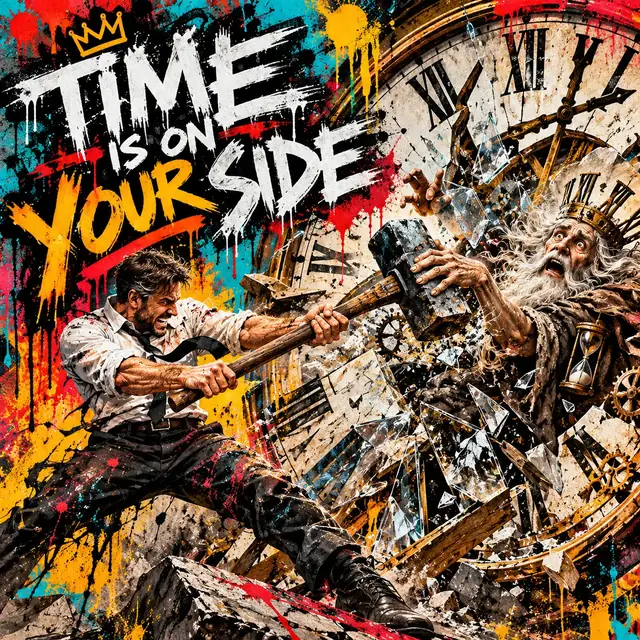
  • Father Time represented the belief that business owners don't have enough time to take greater control of their marketing.

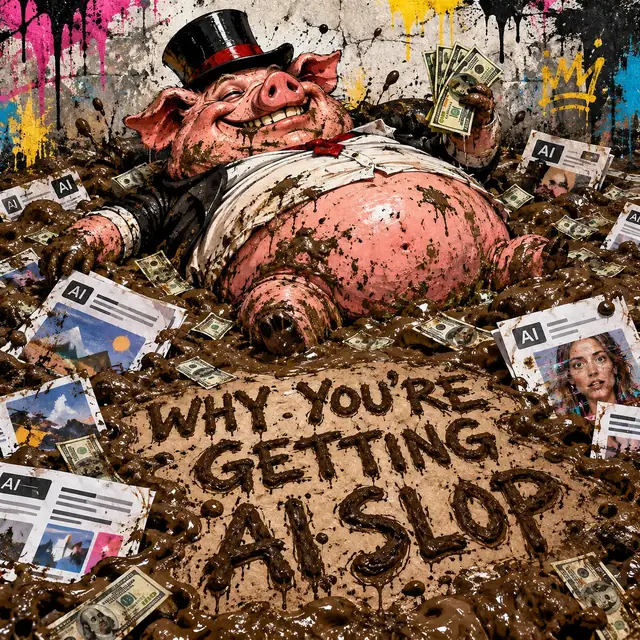
  • The pig wallowing in AI slop represented frustration with agencies profiting from generic, low-quality AI output.

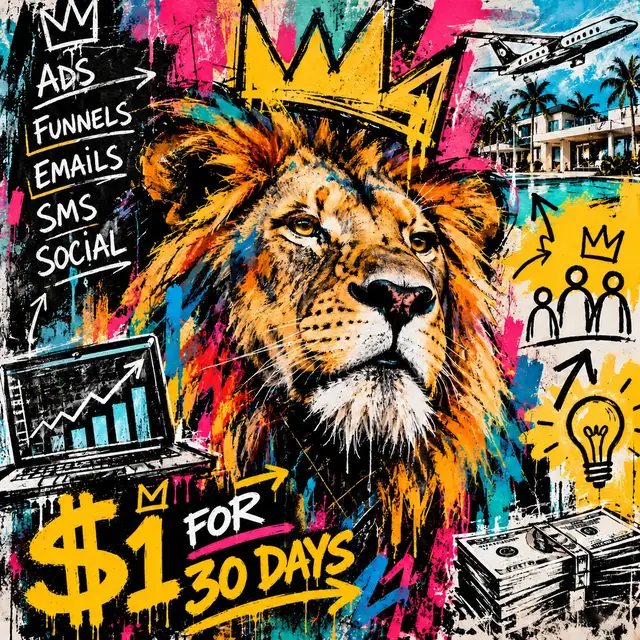
  • The crowned lion represented the offer itself.

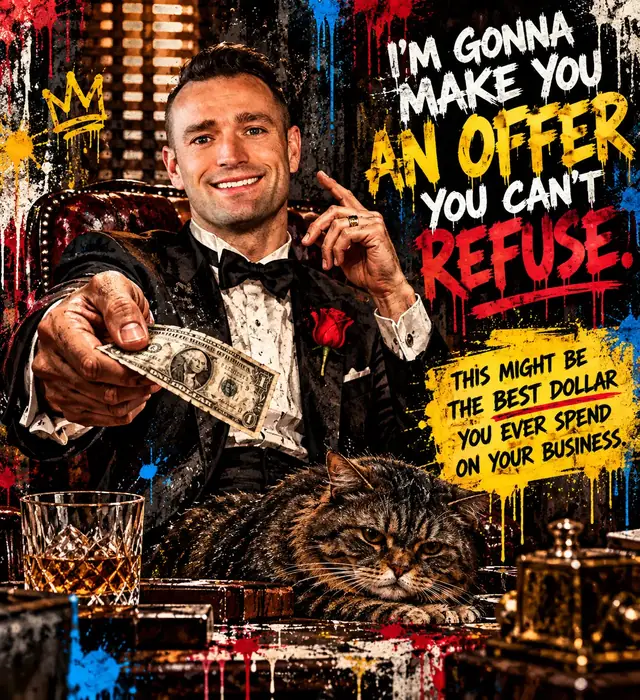
  • And the Godfather-inspired creative turned a familiar cinematic expression into an invitation to explore an unusually inexpensive trial.

The art wasn't decoration.

It was part of the message.

06

The Copywriting Strategy

The image starts the conversation. The copy earns the next click.

We deliberately developed longer primary text for several of these ads.

The product is unusual enough that a catchy headline and three sentences aren't always sufficient to explain it.

The copy addresses the motivation introduced by the image, then develops the story.

Father TimeFor Father Time, that means exploring how much time business owners already spend managing an agency.

AI Slop PigFor AI Slop Pig, it means explaining the training, knowledge, and review processes behind better AI-assisted marketing.

The GodfatherFor the Godfather creative, it means introducing the founder's experience and explaining why he's offering access to his workforce for $1.

Throughout the campaign, we emphasize actual capabilities rather than guaranteed business outcomes.

The objective is to help qualified prospects understand what they're evaluating.

07

Behind the Production Process

Experienced human direction. AI-assisted execution.

This campaign developed through an iterative creative process.

Human

The founder supplied the product knowledge, audience insights, offer, business experience, and creative direction.

AI

AI tools helped explore concepts, develop visual assets, draft copy, and revise the messaging.

The process included feedback, corrections, and creative decisions.

Not every initial idea survived.

And not every first draft was approved.

The human operator remained responsible for the strategic direction and final decisions.

That philosophy also informs The Agentcy of One.

The software provides access to a trained, coordinated AI marketing workforce.

Business owners can direct work through Mission Control, review deliverables, request changes, and approve what gets published.

The purpose is to make experienced marketing execution more accessible while preserving human judgment and control.

08

The Offer Behind the Campaign

What exactly are we advertising?

The Agentcy of One is a software platform that gives business owners access to a trained AI marketing workforce.

It can help with copywriting, Meta advertising, creative production, landing pages, funnels, email and SMS marketing, and related marketing operations.

The workforce uses business-specific information, established workflows, and specialized training to perform tasks.

Users can direct the work through chat, voice notes, and interface controls.

When something requires approval, it comes back to the business owner.

And the owner controls what goes live.

Qualified business owners can try The Agentcy of One for 30 days for $1.

  • After checkout, they can also book a free one-hour onboarding call with the founder to get help connecting their accounts and learning Mission Control.
  • After the trial, the Single plan is $149 per month for one business, and the Multi plan is $299 per month for up to ten businesses.
  • AI provider usage costs are separate, through customer-owned API accounts.
  • The subscription can be canceled anytime.
See The Agentcy of One $1 offer

09

What We're Testing

Creative strategy is a hypothesis until the market responds.

The campaign was designed around several ideas worth testing.

  1. Can provocative street-art imagery attract attention in a feed filled with conventional software advertising?
  2. Will different psychological entry points resonate with different segments of the same audience?
  3. Can longer, conversational ad copy help explain an unfamiliar product?
  4. Will showing the actual workforce, its output, and the founder's experience help address skepticism?
  5. And can an accessible $1 trial encourage qualified business owners to investigate the offer?

Those are questions for real advertising data to answer.

This case study documents the strategic thinking, creative development, and finished campaign assets.

Verified performance results can be added as they become available.

10

Put the Workforce to Work on Your Business

Want to see what The Agentcy of One can do for you?

I've been managing Meta advertising campaigns since 2013.

Over that time, I've managed more than $121 million in Meta ad spend across 158 companies.

I've also spent months developing the AI marketing workforce I now use in my own business and client operations.

And I'm making that same workforce available to qualified business owners.

You can explore the work, see how the system operates, and decide whether it makes sense for your business.

If you want to try it, you can get 30 days of access for $1.

See The Agentcy of One $1 offer